
Carbon Monoxide Alarm Requirements in Ontario: What Every Building Owner Needs to Know
Carbon Monoxide Alarm Requirements in Ontario: What Every Building Owner Needs to Know
New Requirement as of January 1st, 2026
Carbon monoxide (CO) is known as the “silent killer” — a colourless, odourless, tasteless gas that can cause serious illness or even death within minutes at high concentrations. Ensuring your building is equipped with properly installed, code-compliant carbon monoxide alarms is not only vital for life safety, but also a legal requirement across Ontario.
This guide breaks down what carbon monoxide is, how detectors work, and the Ontario Fire Code and Ontario Building Code requirements that building owners, managers, and contractors must meet.
What Is Carbon Monoxide and Why Is It Dangerous?
Carbon monoxide is produced when fuel-burning appliances — such as furnaces, fireplaces, boilers, water heaters, generators, or vehicles — do not burn fuel completely.
Even low levels of CO can create health risks:
1–70 ppm: Mild symptoms such as headaches or increased chest pain in heart patients.
Above 70 ppm: Nausea, fatigue, and worsening headaches.
150–200+ ppm: Disorientation, unconsciousness, and potentially death.
CO detectors measure the concentration of carbon monoxide (ppm) and sound an alarm when dangerous levels are present long enough to pose a risk.
70 ppm can trigger alarms within hours.
400+ ppm can trigger alarms within minutes.
Ontario Fire Code Requirements (Section 2.16)
The Ontario Fire Code requires carbon monoxide alarms in any building that contains a residential occupancy or care occupancy with:
A fuel-burning appliance,
A fireplace,
A storage garage, or
A forced-air fuel-burning appliance serving the suite.
Where CO Alarms Must Be Installed
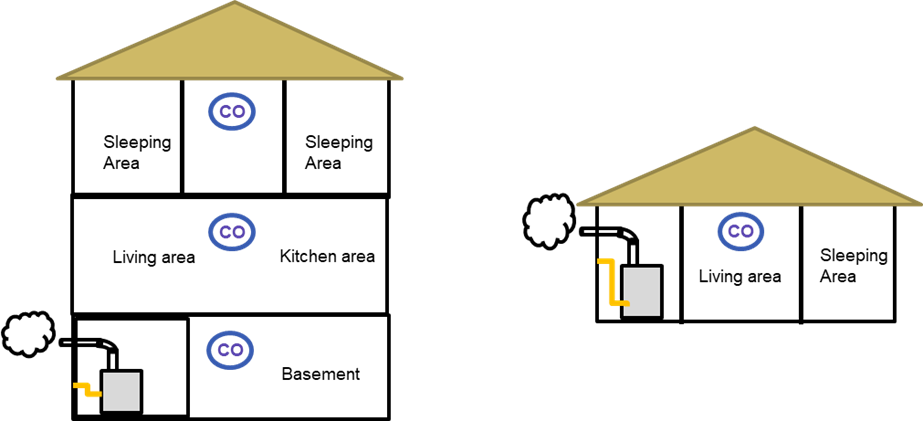
1. Inside a Suite with a Fuel-Burning Appliance or Fireplace
Install CO alarms:
Adjacent to each sleeping area, and
On every storey of the suite without a sleeping area.
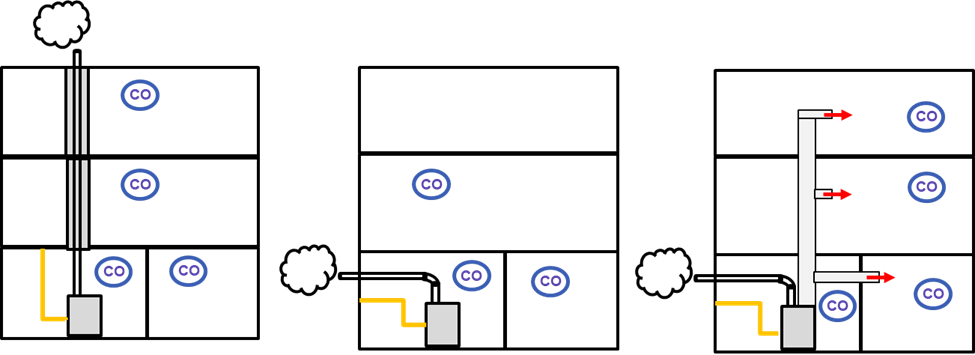
2. In Buildings with Appliances Outside the Suite
If a service room contains a fuel-burning appliance:
Install a CO alarm in the service room,
Install a carbon monoxide alarm adjacent to sleeping areas in any suite that shares a common wall, floor, or ceiling with a service room that contains a fuel-burning appliance.
On each storey of those suites without sleeping areas.
3. Buildings with Storage Garages
Install alarms:
By sleeping areas in any suite sharing a wall/floor/ceiling with the garage, and
On every storey without sleeping areas in these suites.
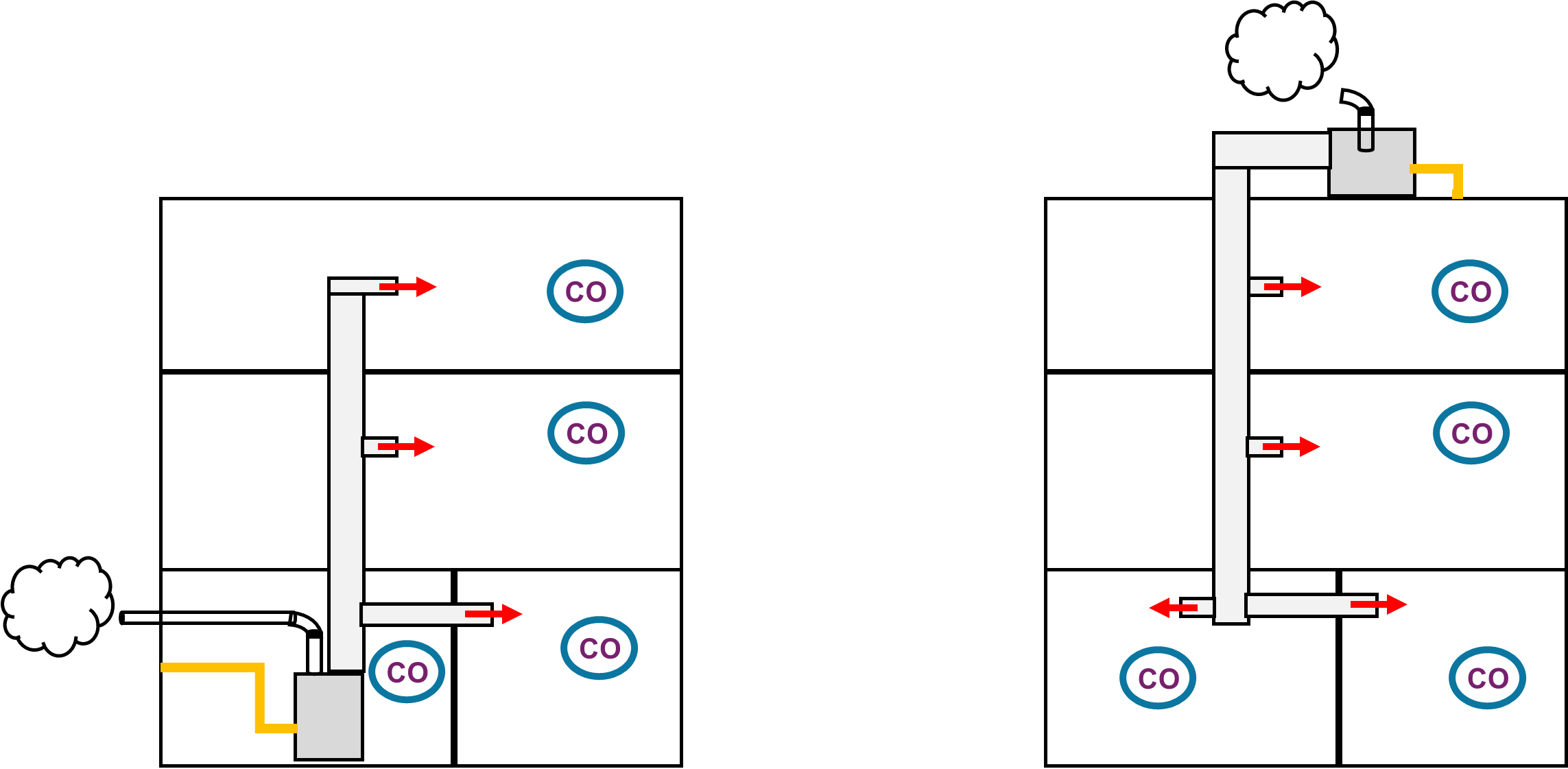
4. Forced-Air Fuel-Burning Appliances Not Located in Suites
Install CO alarms:
In the service room,
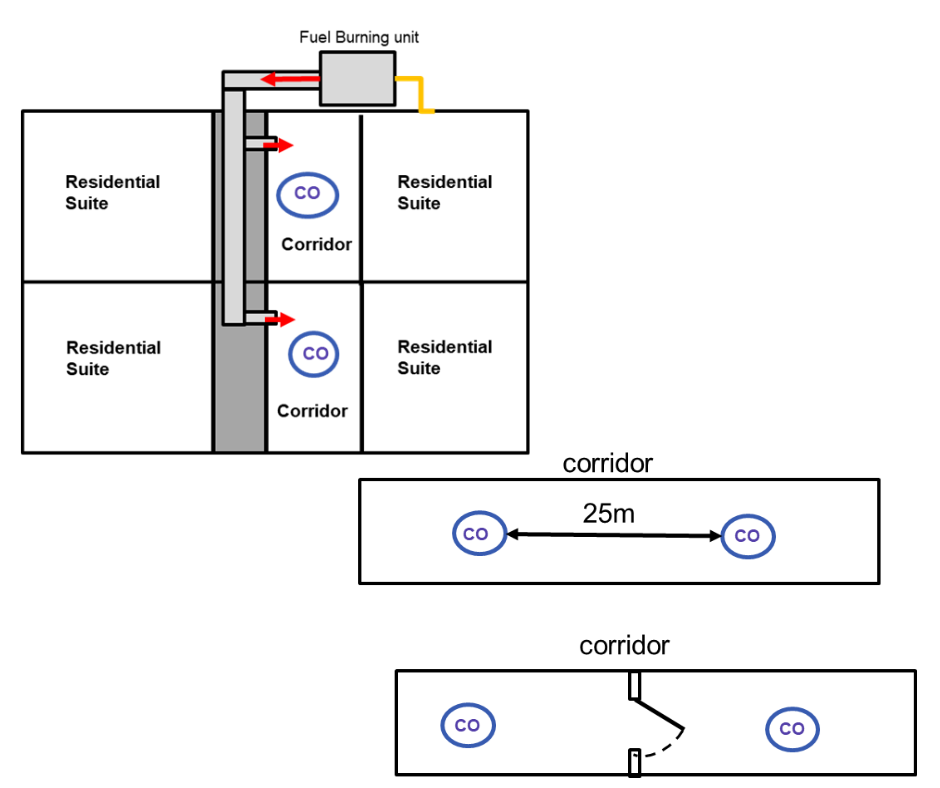
In public corridors directly heated by the appliance (spaced max 25 m apart),
Adjacent to each sleeping area in affected suites, and
On each storey in those suites without sleeping rooms.
Installation Specifications
CO alarms must:
Be hardwired, battery-operated, or plug-in,
Meet CSA-6.19 or UL 2034 standards,
Be installed at the manufacturer’s recommended height (or near the ceiling), and
Be audible throughout sleeping areas even with doors closed.
Ontario Building Code Requirements (Section 6.9.3)
The Building Code outlines similar but distinct requirements for new construction and major renovations.
Buildings Requiring CO Alarms
Any building with:
Residential occupancy,
Care occupancy,
Sleeping rooms not within a suite,
AND a fuel-burning appliance or storage garage
—or—
Buildings where suites are heated by a forced-air fuel-burning appliance located elsewhere.
CO Alarm Locations in Suites
Install alarms:
Adjacent to each sleeping room, and
On every storey without a sleeping room.
If the suite is a combined living and sleeping area, one alarm in that area is acceptable.
Public Corridors
If a forced-air fuel-burning appliance directly heats the corridor:
Install CO alarms in each corridor section, spaced no more than 25 m apart.
Service Rooms
Every service room containing a fuel-burning appliance must have a CO alarm.
Power & Interconnection Requirements
CO alarms must be:
Permanently connected to an electrical circuit with no disconnect switch,
Equipped with battery backup (8 hours standby + 12 hours alarm capability),
Interconnected so activation of one triggers all alarms within:
A suite, or
A corridor serving suites.
Visual signalling (strobes) is required.
Why Compliance Matters
Proper CO alarm installation:
Saves lives,
Reduces liability for building owners,
Ensures compliance during inspections,
Helps maintain insurance requirements, and
Demonstrates commitment to occupant safety.
Certi-Fire Can Help
At Certi-Fire, we specialize in fire code compliance, CO alarm installation guidance, and safety training for contractors, building managers, and technicians. Our experts ensure your building meets both Ontario Fire Code and Ontario Building Code requirements — without the confusion.
Whether you manage residential properties, care occupancies, or mixed-use buildings, Certi-Fire is here to ensure you stay compliant, safe, and inspection-ready.
Carbon monoxide and fire alarm requirements can be complex in real buildings. Our Fire Alarm Certification Courses for Ontario electricians help you interpret Ontario Fire Code, National Building Code and CAN/ULC standards on actual jobsites.
-
Yes. Ontario's Fire Code requires CO alarms in most residential buildings, including homes, apartments, and condos. Requirements expanded significantly as of January 1, 2026.
-
At minimum, one CO alarm is required on every storey and outside each sleeping area. Larger buildings may require more depending on fuel-burning appliances and layout.
-
CO alarms must be installed on every level of a home and adjacent to all sleeping areas. They must also be placed near any fuel-burning appliances such as furnaces, fireplaces, or attached garages.
-
As of January 1, 2026, Ontario expanded CO alarm requirements to additional building types and added new placement rules. Building owners should review Ontario Fire Code O. Reg. 213/07 or consult their local fire department for specifics.
-
Yes. Landlords in Ontario are required to install, maintain, and test CO alarms in rental properties and ensure they are in working order.